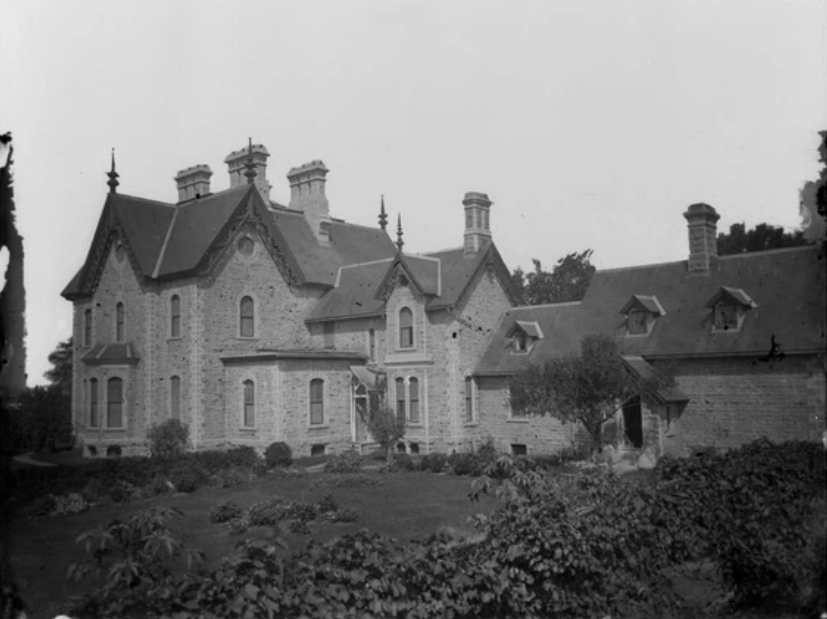

As you breathe in the crisp air of modern-day Ottawa, you can still catch a faint scent of freshly cut white pine—the lingering aroma of an empire built by John Rudolphus Booth. While others saw only rugged wilderness in the Canadian bush, one family managed to forge a nation’s foundation from the timber. Ottawanka invites you behind the scenes of history to discover how the provincial town of Bytown was transformed into the heart of the country through the iron will and soaring ambitions of the Booth dynasty.
Building an Empire: From Carpenter to Timber King
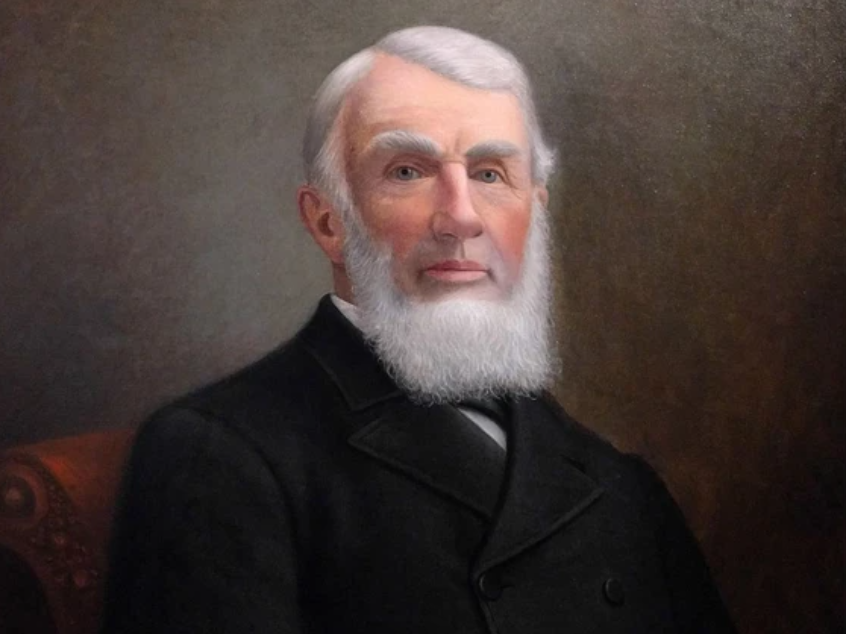
Born in 1827 on a farm in Loach, near Waterloo, Lower Canada (now Quebec), John Rudolphus Booth was the son of Irish immigrants. At twenty-one, he traded the family farm for a carpenter’s bench at the Central Vermont Railroad. By the early 1850s, he arrived in Bytown, landing at the same time as legendary lumber barons like Henry Bronson, W.G. Perley, John Harris, and E.B. Eddy. Those who knew him often remarked:
“He knew the forest like a sailor knows the sea, and his success came largely because he never overestimated its potential.”
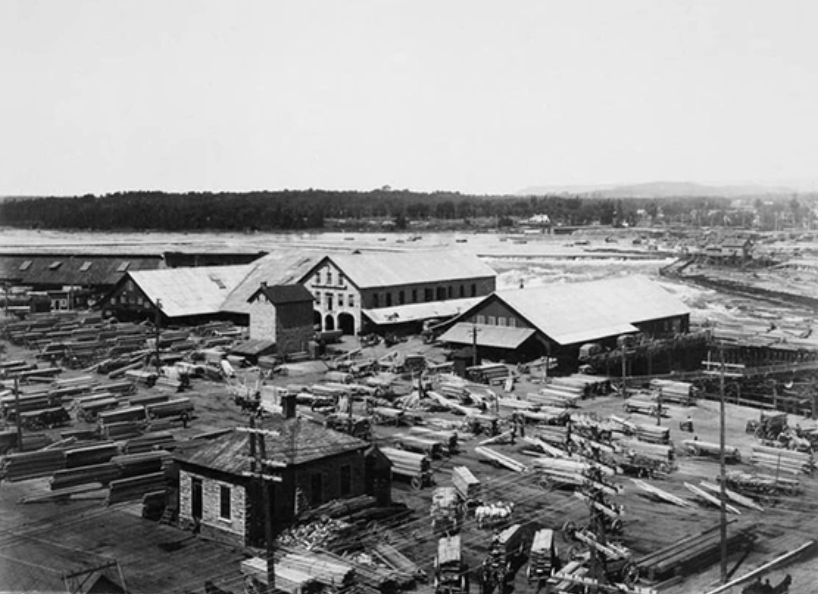
J.R. Booth settled in Ottawa in 1857 and remained a fixture of the city until his passing on December 8, 1925. By then, he had built what was once the largest lumber mill in the world.
5 Surprising Facts About the Man Who Built Ottawa
- A King with an Axe: Even as a multi-millionaire and one of Canada’s wealthiest citizens, Booth wasn’t afraid of physical labour. He was frequently spotted at his mills working alongside his men. He knew his machinery down to the last bolt and would personally fix breakdowns, earning him deep respect from his crew.
- The Railway Disruptor: When major railroads refused to lower their freight rates for his timber, Booth didn’t negotiate—he simply built his own. The Canada Atlantic Railway became so successful that he eventually sold it for a staggering $14 million, a colossal sum at the time. This move solidified his place among Ottawa’s first railroad pioneers.
- Sourcing the House of Commons: The very white pine used to build Canada’s original Parliament Buildings came from Booth’s limits. When you look at archival photos of early government interiors, you are looking at timber harvested and processed by Booth’s empire.
- Rising from the Ashes: The Great Fire of 1900 (Ottawa-Hull) devastated his empire, turning millions of board feet of lumber into ash in hours. While any other businessman might have declared bankruptcy, Booth rebuilt within months, paid off his debts, and ensured his workers kept their jobs.
- Billionaire Modesty: Despite a fortune that rivalled the budgets of small nations, Booth lived a remarkably frugal life. His passion was the business itself, not luxury. Legend has it he knew hundreds of his employees by name and could recall exactly when they started working for him.
Shaping the Landscape of Old Ottawa
Algonquin Park, so well-known to modern generations, would look very different without J.R. Booth’s influence. His operations reached deep into the wilderness, shaping the park’s early history in ways that are still being uncovered by historians today.
In 2023, Roderick MacKay published “J.R. Booth: Lumberman, Railroad Builder, Industrialist, Great Canadian and the impact on Algonquin Provincial Park.” This work, the result of years of archival research, shines a light on the lesser-known aspects of the “Timber King’s” life and his influence behind closed doors in Ottawa’s elite circles.
Family Secrets and a Disappearing Fortune
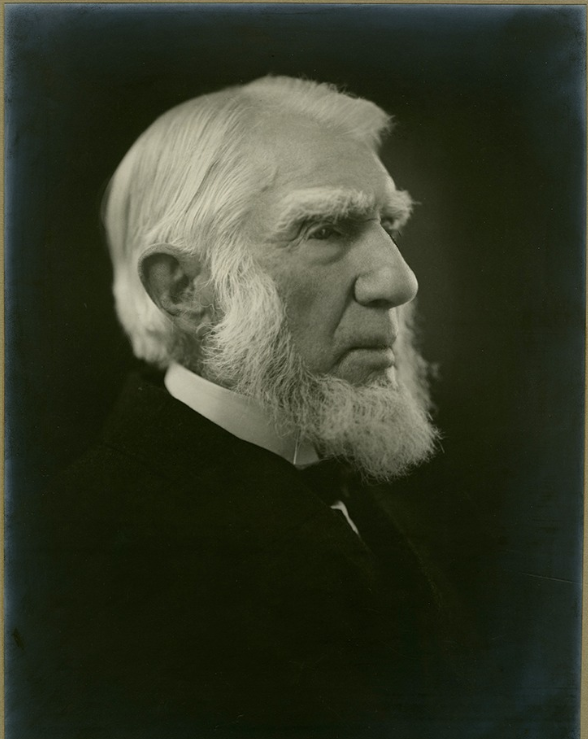
When J.R. Booth passed away in 1925 at the age of 98, he left behind one of North America’s most powerful industrial empires. He built his wealth on lumber, grain, and pulp, employing thousands. Yet today, “Booth Enterprises” isn’t a household name like other industrial giants. Many wonder: where did that massive fortune go?
- The Tax Collector: By the time of his death, Canadian laws had grown less friendly to massive estates. A significant portion of his wealth was paid to the government in succession duties, forcing his heirs to liquidate assets just to settle the bill.
- The Great Depression: Booth’s son Jackson and his grandsons faced the 1930s—a decade that crippled the timber industry. As steel and concrete began to replace wood in modern construction, the “gold mine” of timber began to dry up.
- Corporate Consolidation: Strategic assets were gradually sold off. The Canada Atlantic Railway was integrated into larger networks, and his milling operations were eventually absorbed by the E.B. Eddy Company, which was later swallowed by even larger conglomerates.
- Expropriated Land: Rumours persist that much of the family’s wealth was tied up in downtown Ottawa real estate. Significant portions were eventually expropriated by the government to expand Parliament Hill and facilitate the work of the National Capital Commission (NCC).
- Dilution through Generations: As is common with Ottawa’s wealthiest dynasties, the capital was divided among many heirs. The Booth millions didn’t vanish—they dissolved into charitable foundations, private estates, and the education of descendants. A notable example is Booth’s granddaughter, Lois, who married Prince Erik of Denmark in 1924, a major highlight of the era’s high society.
Quick Facts: The Booth Legacy
Here are the key milestones of the Booth empire that fundamentally changed the face of the capital.
| Category | Asset & Significance | Impact on Ottawa |
| Lumber Industry | Chaudière Falls. The world’s largest sawmill at its peak. | Created thousands of jobs; made Ottawa the global timber capital. |
| Railways | Canada Atlantic Railway (CAR). A private network for US/European exports. | Led to the construction of Ottawa’s Central Station and modernized transit. |
| Real Estate | 252 Metcalfe Street. A grand residence symbolizing family status. | Defined the architectural prestige of the city’s downtown core. |
| Logistics | Depot Harbour Grain Elevator. A vital shipping hub. | Ensured Ottawa’s dominance over other regional trading hubs. |
| Nation Building | White Pine supply for Parliament. | Literally built the foundation of Canadian democracy. |
Why the Booth Story is Canada’s Story
Today, the Booth name is often eclipsed by glass skyscrapers and the political buzz of Parliament Hill. Yet, if you listen closely to the history of Old Ottawa, you can still hear the rumble of the sawmills and the whistle of their trains. The Booths were visionaries who saw a nation where others only saw wilderness.
Their story proves that true power doesn’t always come with an official title. It’s built on the ability to spot opportunity in the thickest brush. The infrastructure they left behind has survived a century for a reason.
Ultimately, Old Ottawa isn’t just a collection of streets; it is a monument to the Booth dynasty, whose iron will and timber empire became the bedrock upon which the modern Canadian capital stands.