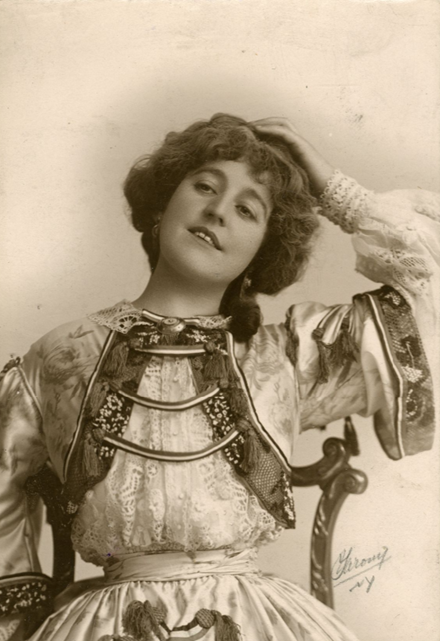

The history of global art is marked by only a few names capable of transforming personal anguish into timeless classics. Margaret Anglin, hailed by critics as “The Queen of Tragedy from Ottawa,” was exactly that kind of iconic figure. Her journey from Canadian stages to international stardom wasn’t just a celebrity biography; it was a real-life drama. Ottawanka explores how this Ottawa native conquered the world with her talent and why her legacy remains vital for art lovers today.
Early Years in Ottawa and the Making of a Dramatic Talent
Mary Margaret Warren Anglin was born the youngest of nine children into a prominent political family. Her father, Timothy Warren Anglin, was a well-known newspaper editor and politician who served as the Speaker of the House of Commons of Canada at the time of Margaret’s birth. The family’s legacy of excellence was significant; her brother, Francis Alexander Anglin, later served as the Chief Justice of Canada from 1924 to 1933.
Margaret’s education took her from Loretto Abbey in Toronto to the Convent of the Sacred Heart in Montreal. Seeking to hone her craft, she eventually moved to New York to attend the Empire School of Dramatic Acting, where she studied under the tutelage of Nelson Wheatcroft.
Her raw talent and refined technique caught the eye of the legendary theatrical manager and producer Charles Frohman. This high-level endorsement paved the way for her professional debut in 1894, appearing in Bronson Howard’s production of Shenandoah.
The Breakthrough: The Phenomenon of Margaret Anglin
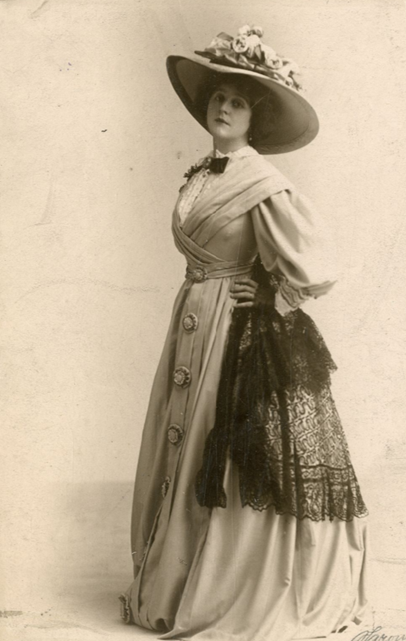
Her breakthrough arrived at the turn of the century, a time when the theatre world was hungry for fresh voices. Starting with the role of Madeline West in Shenandoah, Margaret quickly proved she was far more than just another debutante. Her true stepping stone was touring with James O’Neill, where her portrayal of Ophelia became a sensation. Critics began describing her as a theatrical phenomenon, noting her rare gift for shifting emotional states instantly, forcing the audience to live through every second of the performance with her.
Margaret’s “royal” status was cemented not just by critics, but by the “Divine” Sarah Bernhardt herself. In 1905, after a benefit performance in New York, Bernhardt was so moved by Anglin’s acting that she invited her to collaborate. This public recognition from a living legend served as a formal coronation. From that moment on, Margaret was no longer just a rising star; she was a powerhouse who dictated the rules on Broadway, blending aristocratic poise with explosive emotional depth.
Queen of Tragedy: Reviving the Classics
The title “Queen of Tragedy” was earned through her fearless dedication to the most challenging material in existence: Ancient Greek classics. Following a triumphant tour of Australia in 1909, she returned to the United States with a vision that many considered a gamble—reviving Greek tragedy for the modern era.
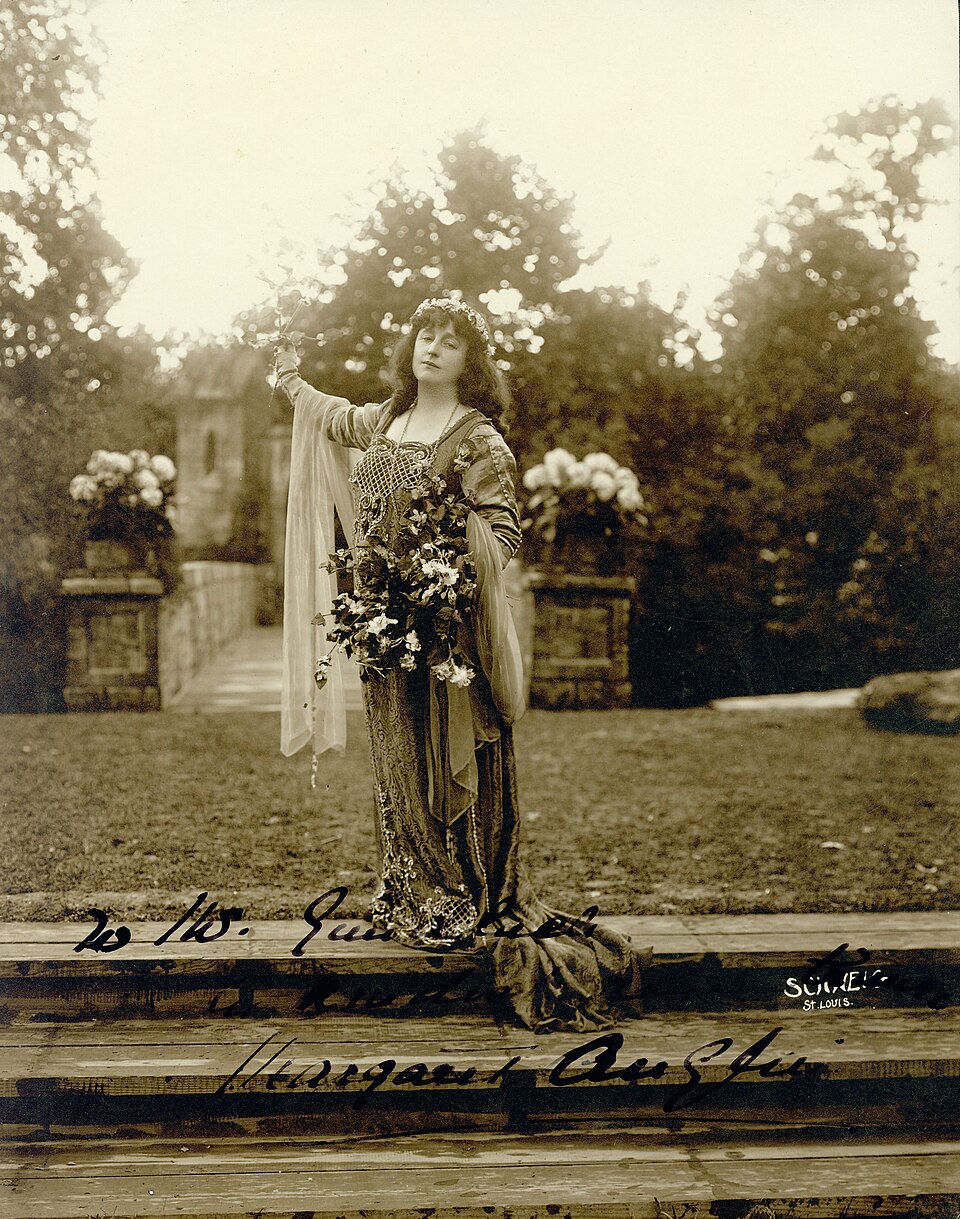
Her performance as Antigone at the Greek Theatre in Berkeley was nothing short of revolutionary. Margaret wasn’t just the lead actress; she acted as director, producer, and designer. She modernized the ancient texts of Sophocles and Euripides, making them accessible to a 20th-century audience through several innovative techniques:
- She replaced the traditional, cold Greek masks with realistic makeup so the audience could see the nuances of her facial expressions.
- She pioneered nighttime performances, using artificial lighting to create a mystical, atmospheric mood.
- She chose roles of strong, tragic heroines—such as Medea, Electra, and Iphigenia—reimagining them for the modern woman.
Her success extended to Shakespearean roles in The Taming of the Shrew and Twelfth Night. Margaret Anglin proved that high-brow classics could be commercially successful. Her devotion to the craft was so absolute that she famously ignored the burgeoning film industry, believing that only the stage offered true artistic greatness. This level of grit reminds one of other formidable legends from Ottawa’s history who refused to compromise their principles.
Drama Behind the Scenes: The Price of Fame
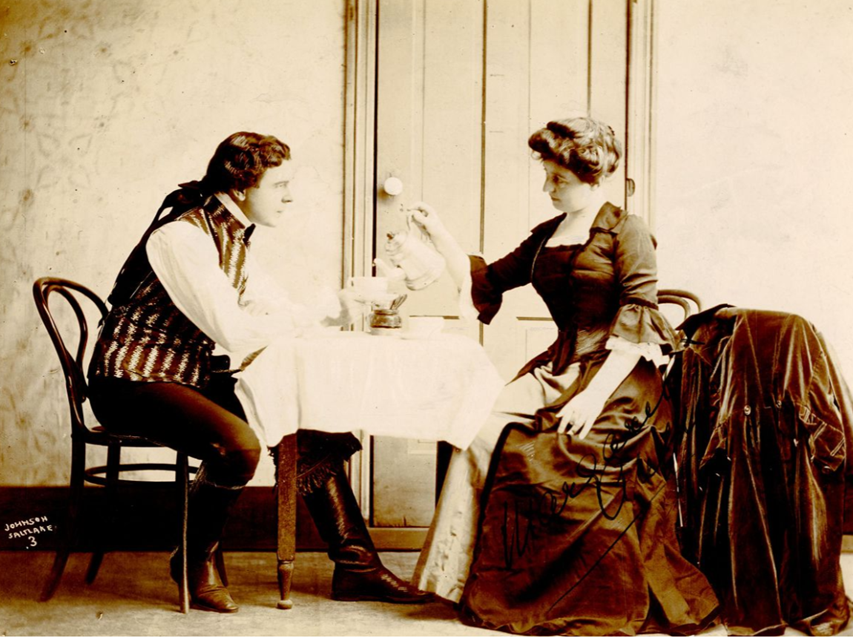
Off-stage, Margaret found happiness with a fellow actor, Howard Hull. They married in 1911, and through this union, she obtained U.S. citizenship. Their marriage was a rare example of steadfast loyalty in the volatile world of show business. This loyalty eventually led to her most famous clash with Broadway’s elite. When producers refused to cast her husband in a production they were meant to do together, Margaret didn’t hesitate—she walked away, tearing up her contracts and leaving the stage for seven long years. It was her own personal tragedy, proving that her role as a devoted wife outweighed her status as a leading lady.
Margaret’s life eventually came full circle. In 1953, after decades of triumphs in New York and global tours, she returned to Canada, settling in Toronto. The couple had no children.
Margaret Anglin passed away on January 7, 1958. She was laid to rest at Mount Hope Catholic Cemetery in Toronto. Her story is not just one of Broadway success, but a testament to staying true to one’s roots and the people you love.
Fast Facts About Margaret Anglin
This is the story of a girl from a respected political family who chose the spotlight over a quiet social life. Margaret Anglin didn’t just perform on stage—she owned it. Even the legendary Sarah Bernhardt recognized her as a star of the highest magnitude.
In the video below, you can explore the journey of a woman who did the impossible: she became the preeminent “Queen of Tragedy,” conquering Broadway with her interpretations of the Greeks and Shakespeare. It’s a tale of unprecedented success, early-career struggles, and an iron will.
Margaret was so committed to live theatre that she viewed cinema as “too small” for high art. Her principles were non-negotiable—when the industry crossed her family, she simply turned her back on fame to protect her values.
Margaret Anglin: Essential Facts
| Category | Description |
| Full Name | Mary Margaret Warren Anglin. |
| Title | “The Queen of Tragedy from Ottawa.” |
| Background | Daughter of the Speaker of the Canadian House of Commons, born in the Parliament building. |
| Breakthrough | Endorsement by the legendary Sarah Bernhardt in 1905 and her role as Ophelia. |
| Theatrical Impact | Reviving Greek tragedies (Sophocles, Euripides) using innovative artificial lighting. |
| Core Principles | Conscious rejection of cinema and prioritizing family loyalty over Broadway contracts. |
| Legacy | Pioneer of realistic stage makeup and modern adaptations of classical drama. |
A 21st-Century Legacy
Margaret Anglin left behind more than just archives and yellowed playbills. She etched a deep emotional code into global culture that remains powerful decades later. Her status as “The Queen of Tragedy from Ottawa” isn’t a relic of the past; it’s a recognition of her unique ability to bare the human soul.
For a modern generation that prizes authenticity, Margaret serves as a vital guide. In an age of “fast content,” her journey reminds us that true art requires depth, and great success is impossible without solid principles. She was a woman who wasn’t afraid to swim against the tide.
The story of Margaret Anglin is a bridge between classical drama and our modern understanding of success. Her life teaches us that true fame is born where sincerity overcomes pain and professionalism meets the courage to be oneself. As long as we continue to seek answers to eternal questions of love and sacrifice, her experience remains a living textbook for anyone dreaming of leaving a mark on the world of art.