

Looking back at the prominent figures of Bytown’s early days, few command as much fascination as Mother McGinty. She was a hardened, formidable woman who fearlessly held her own in the rough-and-tumble settlement of Colonel John By. Her grit was more than enough to run the city’s most famous and profitable tavern. Ottawanka takes a closer look at the life of this legendary Queen of wild Bytown.
Who Was Mother McGinty?
The Historical Society of Ottawa, which has been preserving local lore since 1898, frequently highlights the story of Mother McGinty. Born Sarah in Ireland around 1803, she came from a wealthy Protestant family. However, her life took a dramatic turn when she fell for the family’s Catholic groom, John McGinty. In a classic tale of forbidden love, the couple eloped to New York around 1823.
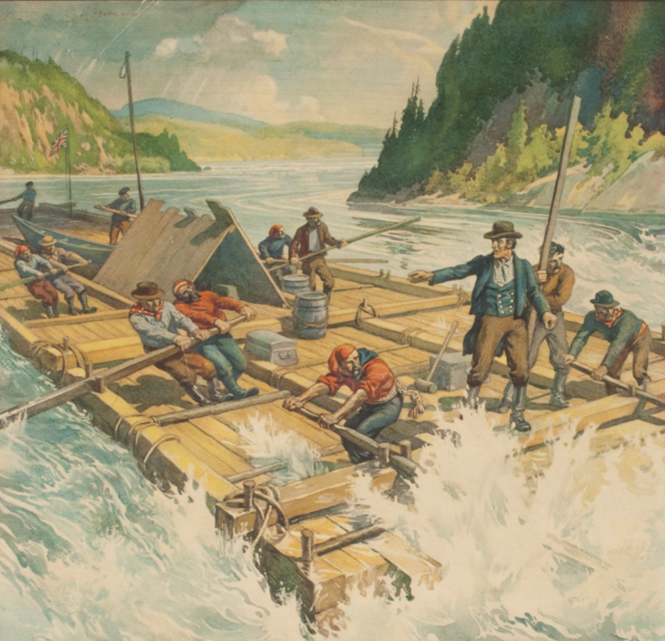
After a brief stint working on the Erie Canal, the couple headed north to the burgeoning settlement of Bytown. At the time, Lieutenant-Colonel John By was spearheading the massive engineering feat known as the Rideau Canal. While John McGinty quickly found work on the canal, Sarah chose a far more unconventional path for a woman of her time.
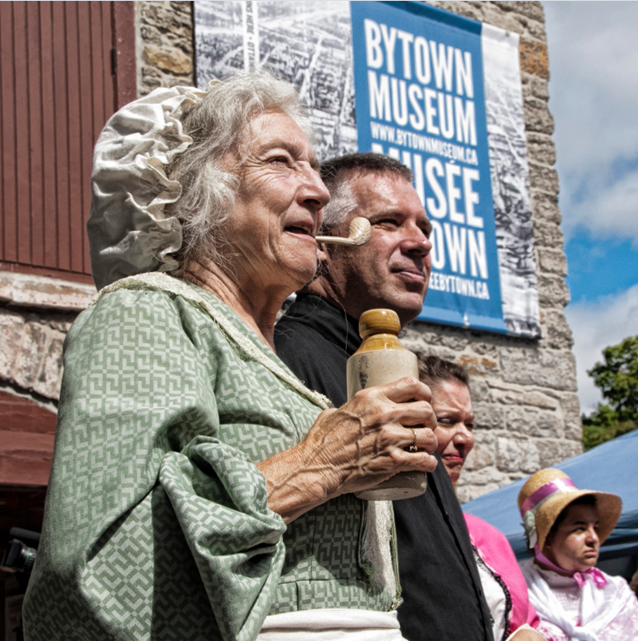
Sarah opened a tavern to quench the thirst of the weary labourers building the canal. While original photos of Mother McGinty are nearly impossible to find, historical reenactments at the Bytown Museum help bring her legacy to life. Today, museum archives still refer to her as the most beloved mother in the Bytown area.
One of Bytown’s First Businesswomen
Mother McGinty could not read or write, but she was a savvy entrepreneur. She kept track of her customers’ debts by carving unique hieroglyphics into the tavern walls. But she wasn’t just known for her bookkeeping; she was both respected and feared. Legend has it her right hook was so powerful that few men dared to cross her in a brawl.
When studying Bytown’s history, it is often hard to separate fact from folklore. Stories of her incredible physical strength and endurance abound, but in those days, such toughness was a necessity. It was the only way a woman could survive and thrive among the rowdy workforce of early Ottawa.
Much of what we know about her popular pub in Corktown comes from the writings of William Pitman Lett. In his iconic poem “Recollections of Bytown,” he immortalized this legendary woman through several key traits:
- Absolute Authority: Lett noted she was both master and mistress of her house, serving as everything from a welcoming hostess to a no-nonsense bouncer.
- Physical Presence: Her mighty arm and athletic charms were enough to intimidate even the most drunken canal workers. Her mere presence could silence a room—a feat described as a near-supernatural ability in those rough times.
- Innovative Accounting: Lacking a formal education, she used a system of notches: lines for pints and quarts, and an eagle’s claw symbol to represent a gallon.
- Tough Love: While she was a generous hostess, her kindness ended where debt began. She was known to publicly shame anyone who failed to pay their tab, often using a sharp, biting sense of humour.
The Social Hub of Corktown
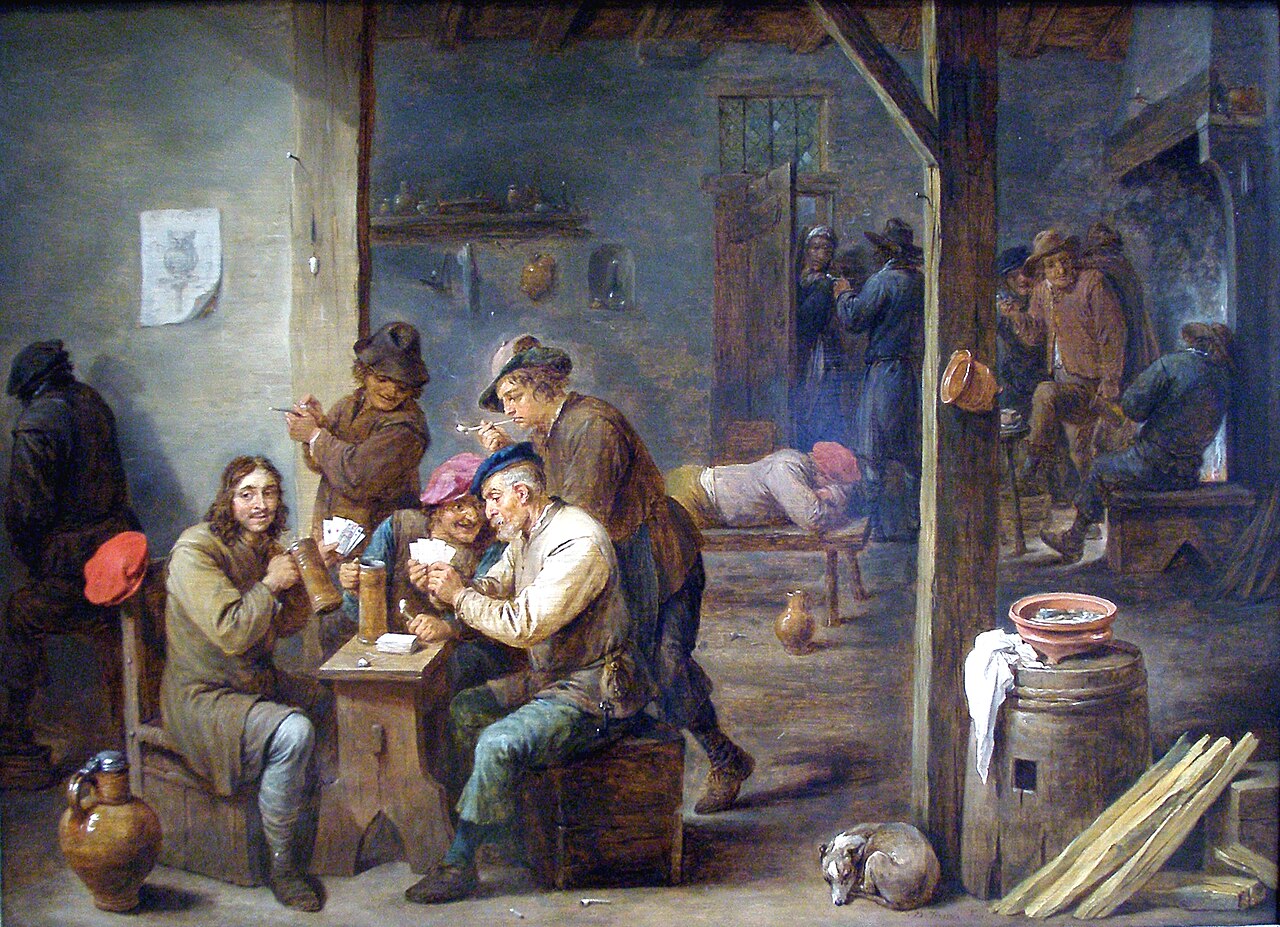
Lett described McGinty’s tavern as a classic ground filled with dancing, singing, and merriment. It was the beating heart of social life for Irish labourers. Ironically, these exhausted men felt safest under the protective wing of Mother McGinty.
The tavern was located in Corktown, an Irish settlement that sprang up along the “Deep Cut” of the Rideau Canal, near today’s Laurier Avenue Bridge. As the undisputed queen of the settlement, she ensured that the beer, shrub (a mix of fruit juice, sugar, and rum used to fight scurvy), and poitín (Irish moonshine) never stopped flowing.
When the canal was completed in 1832, the McGintys moved on to the Wabash Canal project to start a new business. According to Bytown Museum researchers, Sarah eventually passed away in Iowa sometime between 1850 and 1856.
From Shanty Town to UNESCO World Heritage
The site where the tavern once stood is now part of the picturesque Rideau Canal, a UNESCO World Heritage site. The muddy Irish camps have been replaced by the Queen Elizabeth Driveway—a scenic route with bike paths that transforms into the world’s longest skating rink in the winter.
Today, the area formerly known as Corktown includes parts of the trendy Golden Triangle and Centretown, located just steps from Ottawa City Hall and Confederation Park. In 2006, the Corktown Footbridge was opened, connecting Centretown to the University of Ottawa campus—a direct tribute to the Irish workers and Mother McGinty herself.
Mother McGinty’s Pub in Modern Ottawa
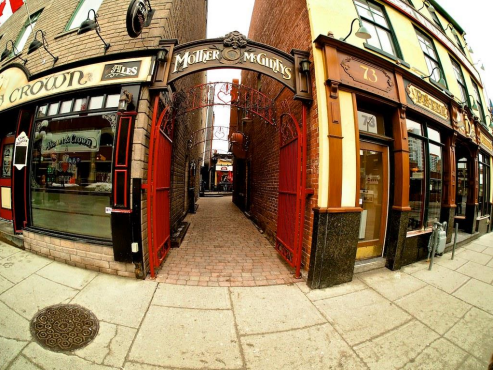
Sarah’s legacy lives on at 67 Clarence St in the historic ByWard Market. The modern-day Mother McGinty’s Pub is a key part of the Heart & Crown restaurant complex. Guests enter through a charming cobblestone alleyway under a wrought-iron sign that proudly bears her name, leading to a courtyard famous for its magical atmosphere.
Inside, the McGinty’s Stage hosts regular live music and karaoke nights. With its dark wood finishes and traditional decor, the pub perfectly captures the spirit of an old-world Irish tavern, honouring the city’s earliest settlers.
A Legend That Refuses to Fade
Beyond the history books, Mother McGinty was immortalized in the 2005 musical “Bye Bye Bytown” by Timothy Piper and Laura Ewing Piper. The production, which celebrated Ottawa’s heritage, was staged at the Centrepointe Theatre and the Ottawa Little Theatre, featuring local talent and a healthy dose of civic pride.
“Whoo! Boys, it’s a grand day when the work is done and you’ve got your pay… a quart of beer for all the lads and a half-pint of whiskey to catch up to it…”
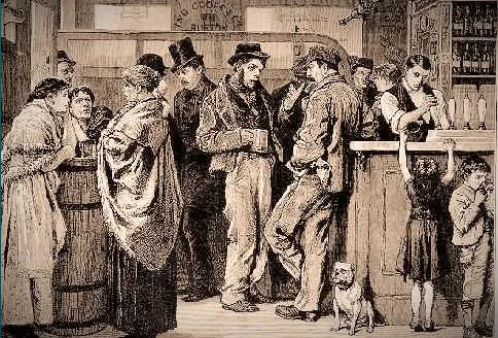
Mother McGinty remains a powerful symbol of female resilience in the male-dominated 19th century. Through grit and hard work, she built a thriving business in a world that was not designed for her. Today, her spirit lives on in Ottawa’s stories, its architecture, and the warm hospitality of the pubs that still carry her name.
Sources:
- https://www.facebook.com/photo/?fbid=2146626922211424&set=a.612111097617428
- https://www.historicalsocietyottawa.ca/publications/books?fbclid=IwY2xjawPpWOxleHRuA2FlbQIxMABicmlkETFYSGhGM2p2a3R3cEIzWDc4c3J0YwZhcHBfaWQQMjIyMDM5MTc4ODIwMDg5MgABHgNv9Z1s9s1otaIBI_d8fopLUn7qughwb2n4q1gF9ycXk7e05Iq5yhIjq6U__aem_UjzMhsjuvWvTf4f9eG4I9g
- https://www.facebook.com/HistoricalSocietyOttawa
- https://www.choralelyrica.com/bye-bye-bytown/
- https://www.instagram.com/p/C63h4PsIKGZ/