

Café · Ottawa · ⭐ 9.9/10 · 1389 reviews · updated: 2026-08-10 17:35:48
Address: 101 Champagne Ave S, Ottawa, ON K1S 4P3, Canada
Most cafés hand you a menu and wait for you to pick a line off it. Café Raphaël hands you the menu mostly out of politeness. What actually happens is a short conversation at the counter — sweeter or sharper, more milk or less, delicate or strong — and then a cup built to that answer, very often in a piece of porcelain older than the building it is served in. The room is small, the owner makes every drink himself, and the whole place runs on a slightly old-fashioned idea: that coffee can still be a personal encounter rather than a transaction with a queue behind it.
Highlights
- Made to measure rather than off a list. The printed offer is a starting point; regulars describe the cup they want and let the owner interpret it, which is closer to how a tailor works than to how a coffee bar usually works.
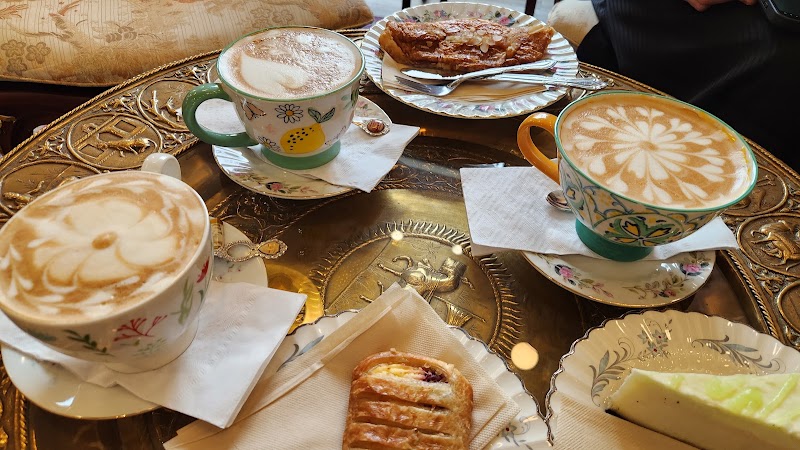
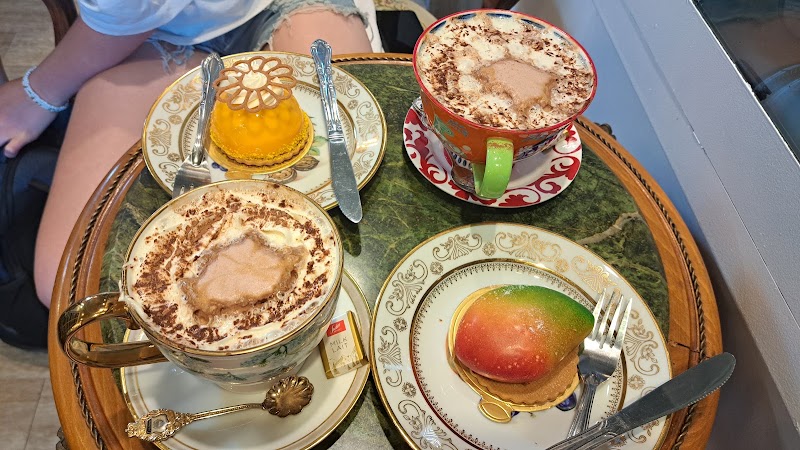
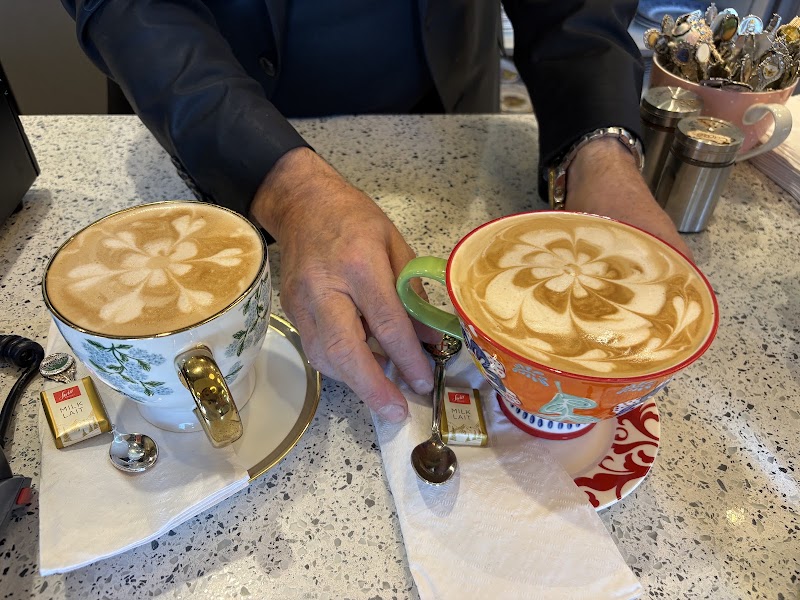
- Antique china instead of house mugs. Drinks arrive in handpicked porcelain and vintage cups, and choosing the cup is treated as part of the ritual rather than as decoration.
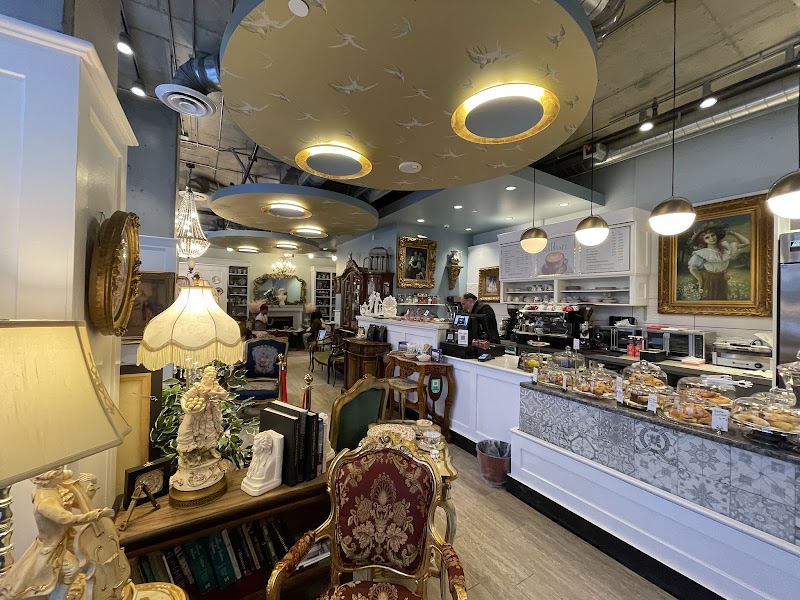
- One person built the room. The owner took an empty retail shell with bare concrete walls and turned it into a velvet-and-chandelier salon himself, gathering the antiques piece by piece at auctions and through collectors’ groups.
- Cannoli to a family recipe. Pastry is prepared fresh in the morning, and the cannoli — made to a recipe kept in the owner’s family — is what the café has become locally known for.
- A weekday room by design. It works the office-and-campus rhythm of its corner of Little Italy and stays shut at the weekend, which regularly catches out visitors planning a slow Saturday.
- Genuinely new. The doors opened in January 2025, so this is a young place still forming its habits — worth knowing before you weigh it against Ottawa’s veteran roasteries.
What’s in the cup
The honest starting point is that Café Raphaël does not publish where its beans come from. There is no named roasting partner on the wall, no origin card beside the grinder, no talk of farms, altitudes or processing methods. In a city where the strongest cafés define themselves by their roaster — and where several of them roast in-house — that is a real gap, and it would be dishonest to paper over it with invented terroir language. Anyone whose idea of a good café begins with a rotating single origin and a conversation about fermentation should know in advance that this is not that kind of address.
What is offered instead is a different promise: consistency of hand rather than provenance of bean. The owner spent years on flavour and technique before opening, and the result shows up in preparation rather than in sourcing. The house style leans warm and comforting rather than bright and acidic. Milk drinks are the centre of gravity; the misto is treated as a serious order rather than a compromise for people who find espresso too strong; and almost anything can be dialled sweeter, softer or more intense simply by saying so. That flexibility is the actual product here. Two people ordering the same drink on the same afternoon may well get two different cups, because the question that precedes the order is not decorative.
The non-coffee side is unusually well looked after for such a small operation. Matcha and spiced chai are prepared with the same care as the espresso-based drinks, and tea is where the antique china earns its keep: served in vintage porcelain, it becomes the reason a table lingers rather than a grudging alternative for whoever came along. In a room this size, that matters — a good share of the seats at any given moment are occupied by someone who is not drinking coffee at all.
Who’s behind it
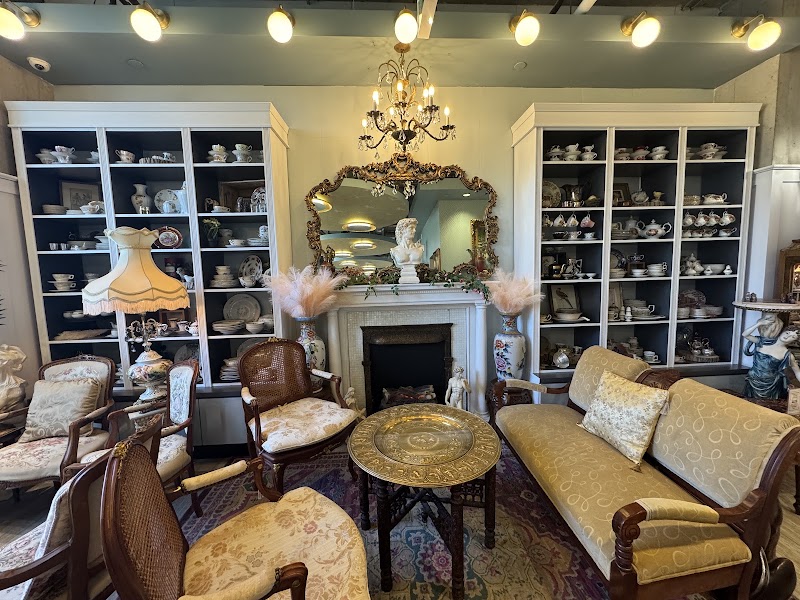
The café carries its founder’s name because it is, in the most literal sense, his. Raphael Wakin runs it single-handed: he designed it, built out much of it, chose every object in it and stands behind the counter making the drinks. The space he started with was an ordinary empty commercial unit at the base of a modern residential building — bare concrete, no character, nothing to suggest what it would become. The velvet seating, the gilded chandeliers, the marble tabletops, the old paintings and the porcelain were assembled one lot at a time at auctions and through collectors’ circles, which is why the room reads as accumulated rather than ordered from a supplier’s catalogue.
His stated philosophy is short enough to fit on a cup: coffee is a conversation, and his job is to listen. That sounds like a slogan until you watch it operate — the questions about how you take it, the memory for what a returning guest asked for last time, the willingness to remake something that missed. It also explains the café’s obvious limitation. One person cannot serve a rush the way a three-barista bar can, and the model only works because the room is small and the owner has decided that being fast is not the point.
Which kind of visit it suits
This is a talking café, and it is worth being clear about that before you arrive with a work bag. Café Raphaël makes no promises about laptop life: it does not advertise power outlets, it does not market itself as a co-working corner, and the room is small enough that a spread-out desk setup would occupy a meaningful share of it. If your plan is four hours of email, Ottawa has cafés built for exactly that, and this is not one of them. Nobody is going to be rude about a laptop for half an hour with a coffee, but the place is not designed around the screen.
What it is built for is a conversation across a small table. Two people, an hour, a pot of something in old china — that is the scenario the room was assembled to serve. It also works remarkably well for the solo visit that is not about productivity: a book, a notebook, a slow cup, the kind of pause that a bright modern café with hard surfaces and loud music actively discourages. First dates do well here for the same reason, because the décor does the work of making an ordinary afternoon feel like an occasion.
The takeaway scenario is the weakest of the three. You can certainly carry a cup out, and people who live in the surrounding blocks do, but ordering to go means skipping most of what makes the place distinctive — the china, the fitting of the drink to the drinker, the room itself. Coming here in a hurry is a bit like buying a ticket to a concert and standing in the lobby.
The room and the mood
The interior is the reason most first-time guests come, and it is unapologetically theatrical. Velvet sofas, golden chandeliers, marble-topped tables, antique paintings, lace and dark polished wood combine into something closer to a nineteenth-century salon than to a contemporary coffee bar, and the effect is heightened by the contrast with what is outside the window: a new residential block in a quiet corner of Little Italy. Stepping through the door genuinely does feel like changing centuries, which is the whole point.
It is also, importantly, a small room. Seating is measured in a handful of tables rather than in dozens of covers, so the atmosphere swings sharply with occupancy. Half full, it is one of the calmest rooms in the neighbourhood — soft surfaces absorb sound, conversations stay at their own tables, and nothing beeps. Full, it becomes intimate in the less flattering sense: your neighbours are close, and there is nowhere to retreat to. Large groups simply do not fit, and turning up as a party of six without warning is optimistic.
Because it sits on the ground floor of a residential building on a quiet side of Little Italy rather than on the busy restaurant strip, there is no passing-crowd noise. That suits the mood but does mean the café is easy to walk past without noticing, and a good number of people find it only because someone told them.
Beyond the coffee
The food question here is simple and binary: this is a pastry café, not a kitchen. Nothing is cooked to order, there is no brunch service, and anyone arriving hungry expecting eggs will be disappointed. What there is, is baking prepared fresh in the morning, with the cannoli as the signature — made to a recipe from the owner’s own family and treated as the house’s calling card rather than as one line among many.
The practical consequence of a small, freshly made pastry offer is that it runs out. Later in the day the counter thins, and the specific thing you came for may already be gone. That is the correct trade-off for the format — a café this size either bakes small and sells out or bakes big and sells stale — but it is worth planning around if the pastry is the reason for the trip rather than a companion to the cup.
When to come
The single most important scheduling fact is that this is a weekday café. It stays closed at the weekend, following the working rhythm of the surrounding blocks rather than the leisure rhythm of a destination coffee shop, and a Saturday morning plan built around it will fail. Check the schedule on the card before you set out; it is the mistake visitors make most often.
Within the working week, the shape of the day is dictated by there being one pair of hands. The stretch before people start work and the lunch break are when whatever queue exists forms, and a queue in a one-person café moves at the speed of the drinks, not the speed of the till. The middle of the afternoon is the sweet spot: the room is quiet, the owner has time to talk, and the made-to-measure ordering that defines the place actually gets the attention it needs. If you are coming for the experience rather than for caffeine, come when nobody else is.
Getting there
The café sits in Little Italy, but on its quiet residential flank rather than on the restaurant strip everyone pictures when they hear the name. Dow’s Lake is an easy walk away, which makes the café a natural stop on a route that takes in the canal, the Arboretum or the Experimental Farm — and a very natural one during Tulip Festival season, when that whole corner of the city fills up.
Public transport is straightforward: the Trillium Line runs along the western edge of the neighbourhood and puts you within a short walk, and the area is well served by buses heading downtown and towards Carleton. Cycling is arguably the best option in warm weather, given the proximity of the canal paths. Drivers should expect the ordinary Little Italy problem — a residential grid where kerbside space is limited and permit-restricted in places — so it is a district you park once in and then explore on foot.
Good to know
Three honest caveats. First, the weekend closure, which is the single most common reason people arrive at a locked door. Second, the size and the one-person model: at busy moments this is a slow café, and impatience is misplaced here because the slowness is structural, not accidental. Third, the missing bean story — if the roaster matters to you as much as the cup, this is not the address that will satisfy you, and there are cafés a few minutes away that will.
On the other side of the ledger, the strengths are unusually specific for a new business. The room is genuinely singular; nothing else in Ottawa looks like it. The service is personal in a way that chains cannot replicate and most independents do not attempt. And the café is refreshingly happy to be judged on hospitality rather than on hardware. It is also worth noting that the place’s own vocabulary borrows freely from French — a small thing, but one that reads naturally in a bilingual capital where switching languages mid-sentence is unremarkable.
Finally, a word about expectations. This is a very young café, opened in January 2025, and young cafés change: the offer, the hours, the baking list and the layout are all still settling. Treat what you read anywhere — including here — as a snapshot rather than a permanent description.
Questions and answers
Does the café roast its own coffee?
No, and it does not name an outside roasting partner either. The bean side of the story is simply not something this café talks about publicly; its attention goes into preparation and service instead.
Can I just order a normal cappuccino without a conversation?
Of course. The made-to-measure approach is an offer, not an obligation, and a straightforward order is served without ceremony. But you will get more out of a visit by describing what you actually like.
Is it a good place to work on a laptop?
Not really. It is small, it makes no claims about power or working conditions, and the whole design points towards conversation. For a working session, choose one of the neighbourhood’s larger coffeehouses.
Is it open at the weekend?
No. This is a weekday operation, and that surprises visitors more than anything else about it. Plan accordingly.
What is there for someone who doesn’t drink coffee?
Quite a lot. Matcha, spiced chai and proper tea are all taken seriously, and tea in particular is served in the antique porcelain that gives the room its character.
Is the pastry made here?
Yes — it is prepared fresh in the morning, and the cannoli follows a recipe from the owner’s family. Because the quantities are small, popular items can be gone before the day is over.
Can I bring a group?
Only a small one. The room holds a handful of tables, and a large party will not fit comfortably. Two to four people is the format the space was built around.
Is it suitable for a quiet conversation or a first date?
It is one of the better rooms in the city for exactly that. Soft furnishings keep the noise down, the tables are separate, and the décor does most of the work of making the occasion feel deliberate.
How long has it been open?
Since January 2025. It replaced a bare, characterless retail unit, and almost everything you see inside was sourced and installed by the owner himself.
What is the surrounding area like?
Quiet and residential, on the calm side of Little Italy rather than in the middle of its restaurant traffic, and within walking distance of Dow’s Lake and the canal — which makes the café a good pause on a longer walk.
Opening hours
| Day | Hours |
|---|---|
| Monday | 09:00–17:00 |
| Tuesday | 09:00–17:00 |
| Wednesday | 09:00–17:00 |
| Thursday | 09:00–17:00 |
| Friday | 09:00–17:00 |
| Saturday | Closed |
| Sunday | Closed |
Photos
Visitor reviews
Reviews last updated: 2026-08-10 17:35:48
Data is refreshed monthly. Sources: ottawanka.com and editorial picks based on reviews.
Чудовий та унікальний досвід відвідування кафе! Ви можете обрати собі чашку! (Я обираю милу білу чашку, прикрашену різнокольоровими сердечками). Рафаель читає вас та ваші смаки, а потім подає вам чудові солодощі! Це кафе…
Захований на першому поверсі багатоквартирного будинку поблизу Маленької Італії, це неймовірний заклад. Дозволено лише особам старше 18 років через велику кількість антикваріату в крамниці. Чудова випічка, а Рафаель готу…
Така чудова кав'ярня!
Власник такий гостинний і сповнений життя. Це був унікальний досвід – вибрати собі власну чашку, і під час нашої розмови можна було відчути дивовижну пристрасть власника.
Дизайн інтер'єру чудовий,…
Кафе «Рафаель» – один із справжніх прихованих скарбів Оттави. Це кафе, де мистецтво, історія, чудова кава та неймовірні десерти поєднуються в ідеальній гармонії.
З моменту, коли ви заходите, вас оточує краса, тепло та сп…
Який чудовий досвід ми з другом, який приїхав до нас у гості, мали два дні тому в чудовому кафе. Рафаель приготував нашу каву досконало, і це була найкраща кава, яку я коли-небудь куштував. Від вибору однієї з чудових ча…