

Café · Ottawa · ⭐ 9.5/10 · 651 reviews · updated: 2026-08-10 17:35:53
Address: 843 Bank St, Ottawa, ON K1S 3V9, Canada
Two of Ottawa’s most interesting coffee rooms sit a two-minute walk apart on the same Glebe street, and they disagree about almost everything. One roasts its own beans and refuses to give you Wi-Fi. Drip House does the opposite on both counts: it buys its coffee from people it rates more highly than itself, and it wants you to stay — to work, to meet, to look at the art on the walls, to still be there when the rest of the neighbourhood’s cafés have closed for the day.
Highlights
- A house blend from Montreal — the espresso is built on a blend made for them by Traffic Coffee Co., a Montreal roastery widely rated among the best in the country.
- Plus a rotating guest list — alongside the house coffee there is a changing selection of carefully sourced beans, often from local micro-roasters, including single origins and micro-lots.
- Every brew method that matters — espresso, batch brew for people in a hurry, pour-over for people who are not, and cold brew.
- The walls are a gallery — local artists show here, and the group treats itself as an art and community space as much as a café.
- Open later than its neighbours — on weekdays this room keeps going into the evening, in a neighbourhood where almost every other coffee counter closes in the afternoon.
- One of several — Drip House runs a small family of rooms across the inner city, with siblings in Chinatown and Hintonburg; the Glebe is the more recent expansion.
What’s in the cup
Drip House does not roast, and it has made an interesting virtue of that. Rather than pretending to a roastery it does not have, it went and commissioned a blend from Traffic Coffee Co. in Montreal — a roaster with a serious national reputation — and built its espresso around it. That is a defensible strategy. A café group opening several rooms needs its espresso to be identical in all of them, and outsourcing the roast to specialists who do nothing else is how you get that without building a production facility.
The second half of the programme is where the curiosity lives. Alongside the house blend there is a rotating selection of carefully sourced coffees, often from local micro-roasters, and that list includes single origins and micro-lots. In practice this makes the café a kind of showcase: you can drink a consistent, well-made milk drink built on a blend chosen for exactly that job, or you can drink something small-batch and unfamiliar from a roaster you have never heard of, without changing venue. Very few cafés give you both halves of the specialty world at one counter.
The brewing covers the full range, and each method is there for a reason. Batch brew serves the person who wants filter coffee immediately and does not want a ceremony. Pour-over serves the opposite person, and is the right way to meet a micro-lot. Espresso carries the milk drinks, and there is cold brew for the months when Ottawa forgets it is a northern city. Alternative milks are treated as normal rather than as a surcharge on somebody’s dietary choice.
If you are choosing between the coffee here and the roastery a couple of doors up the street, the honest framing is this: that one is a roaster showing you its own work, this one is a curator showing you other people’s. Both are legitimate. They are simply different pleasures, and the Glebe is unusually lucky to have both within sight of each other.
Who’s behind it
The group was started by a founder named Martin, working with a team the business is unusually keen to credit, and it has grown over roughly five years from a single neighbourhood room into a small collection of them. That trajectory is the most informative thing about the operation: it did not arrive fully formed with investors and a brand book, it accumulated.
The stated ambition is bigger than coffee. The business describes itself as bringing together specialty coffee, food and culture, and as being a gathering place rather than a service counter — which sounds like standard hospitality boilerplate until you notice that they actually programme it. Local artists show on the walls, the rooms host curated evening events, and the group takes on private functions, launches and catering. That is a café behaving like a venue.
The expansion into the Glebe is the most recent chapter, and it is a slightly bold one. Moving into a neighbourhood that already has a nationally ranked roastery on the same street is not the obvious commercial choice. Drip House did it anyway, and it works precisely because the two rooms answer different questions.
Which visit it suits
This is a work-friendly room, and in the Glebe that is genuinely useful information. The group presents its cafés as places to work and to meet, and the Glebe location’s weekday evening opening extends that further than most: if you need a table and a coffee at an hour when the neighbourhood’s other counters have shut, this is where you go. For students, freelancers and anyone whose working day does not stop at five, that is a real service.
It is equally built for meeting people, which is a different requirement and not every café satisfies both. A room that hosts events and hangs art is a room with something to talk about, and the mix of seating and the lived-in feel make it easier to settle into a long conversation than a minimalist bar with three stools would.
For the solo visit, the art is the differentiator. Sitting alone in a room where the walls change is a materially better experience than sitting alone in a room where they do not, and if you time it to a quiet part of the day you effectively get a small gallery to yourself with a pour-over in hand.
Takeaway is fully covered — batch brew exists for exactly the person walking to the office or the canal — and the Glebe’s main street is one of the best places in Ottawa to walk with a cup in your hand. And if you want the evening version of the concept, one of the group’s other rooms runs later into the night with a bar and small plates, so the same company can serve you at both ends of the day in different postcodes.
The room and the mood
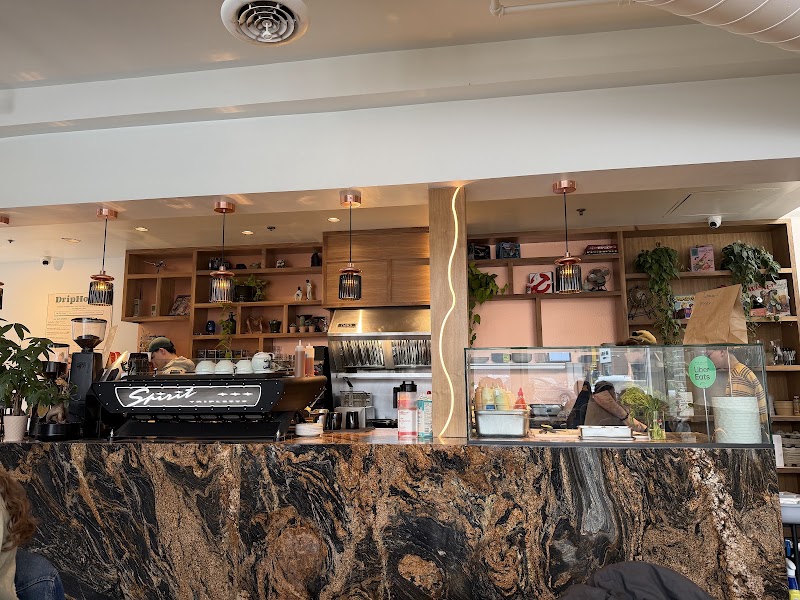
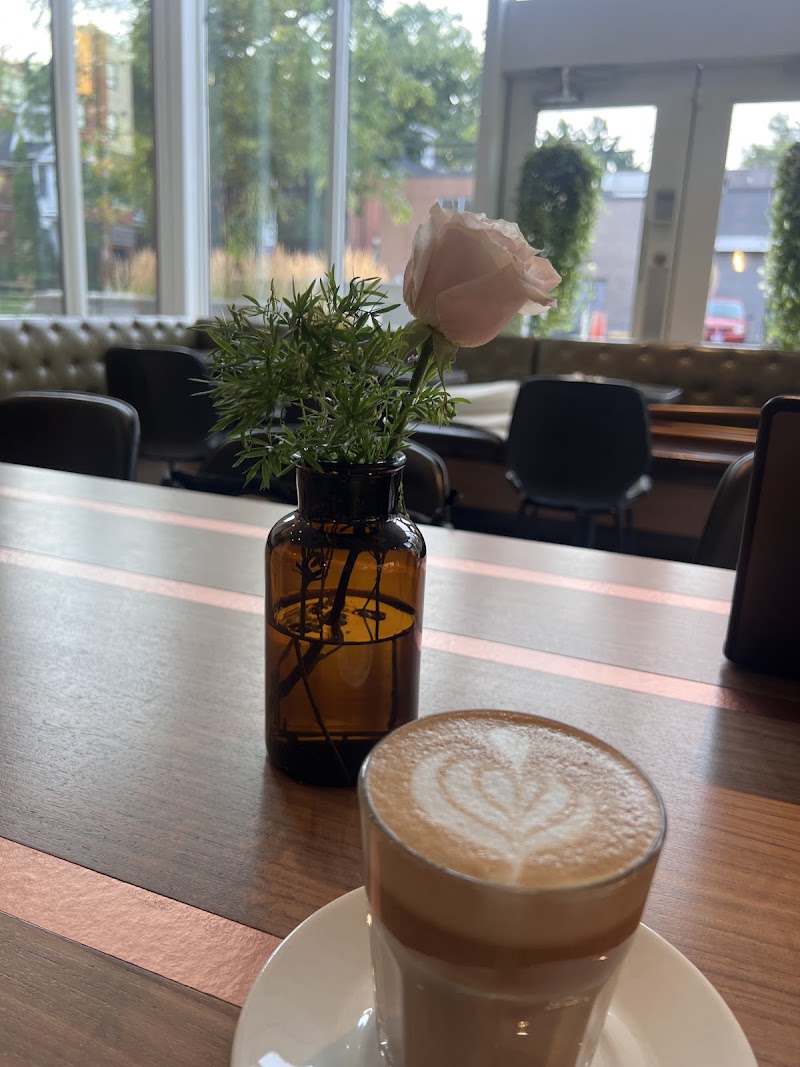
The consistent description of Drip House rooms is welcoming and lived-in — not the sterile white-tile minimalism that specialty coffee defaulted to for a decade, and not a themed interior either. The walls do the work: local artists show here, and because the art rotates, the room’s character is not fixed. That is a rare thing in a café, where most interiors are decided once and then endured for a lease.
It functions as a community space in a fairly literal sense. Curated events are part of the calendar, including tasting-format evenings, and the business actively hosts private functions and launches. That means the room’s energy varies more than a purely transactional café’s would — some evenings it is a quiet workspace and some evenings it is an event.
The Glebe setting shapes the rest. This is a walkable, prosperous, residential neighbourhood with a shopping street through the middle, the Rideau Canal a couple of minutes east, and a stadium at the southern end that periodically fills the entire district with crowds. On a normal weekday the street outside is neighbours and pushchairs; on a game day it is a different city.
Beyond the coffee
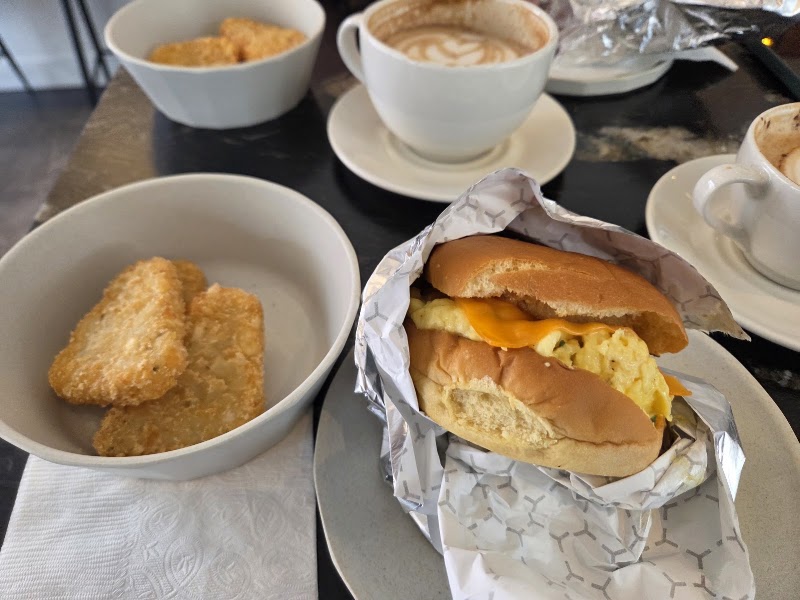
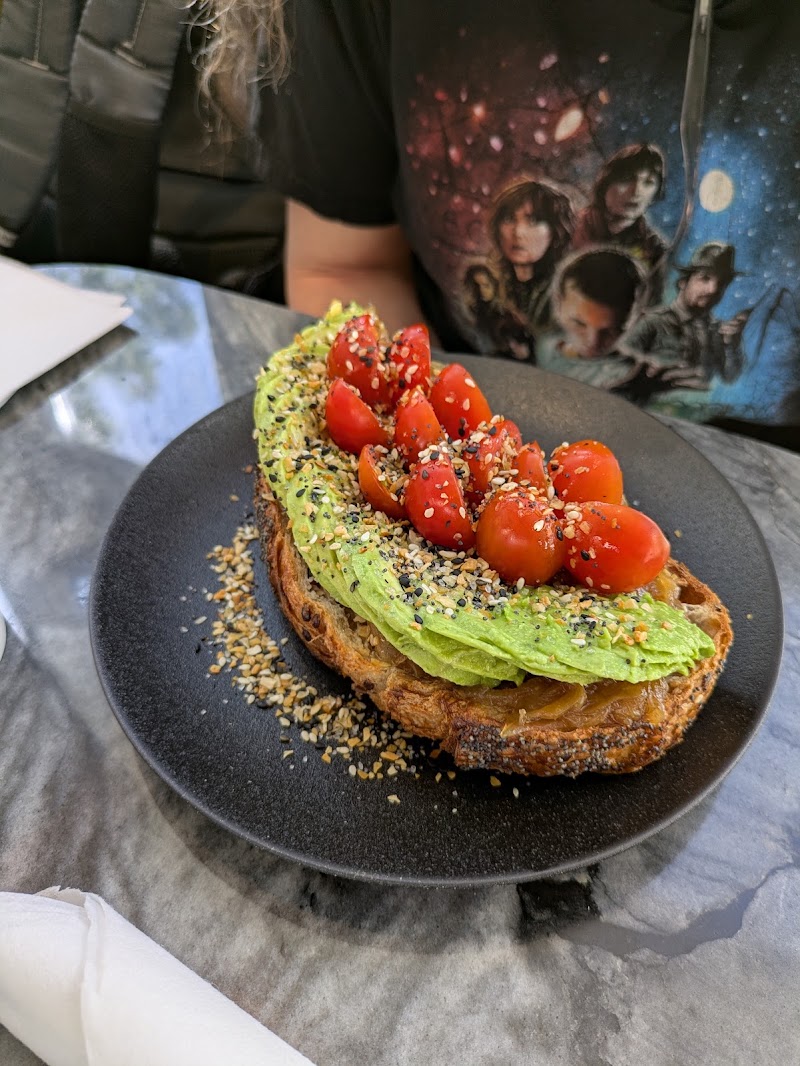
Food is a real part of the proposition rather than an afterthought, which follows from the group’s ambition to be about coffee, food and culture rather than coffee alone. The counter carries ready-to-eat pastries plus daily specials, so what is available shifts rather than sitting static all week, and there is a proper dessert side — seasonal fruit-and-meringue work rather than a tray of the same brownies every café in the country buys from the same supplier.
Plant-based and alternative-milk options are handled as a normal part of the offer. And the business’s wider food ambitions show up in the other rooms of the group, one of which extends into an evening bar with small plates — so if you like what this café does and want the after-dark version of it, the company has one, just not in this neighbourhood.
When to come
The single most useful scheduling fact is the weekday evening. Most of the Glebe’s coffee rooms are daytime businesses; this one keeps serving later into the working week, which makes it the default choice for an after-work meeting or a late study session. At weekends it reverts to a daytime pattern, closing earlier than it does midweek.
Mornings on this street are busy in bursts and the middle of a weekday is the calmest working window. Two things are worth planning around: event days at the stadium at the south end of the neighbourhood, which change the character of the whole street for hours, and the café’s own event calendar, since a curated evening turns a quiet room into a full one. If you are coming for silence, midweek and mid-afternoon is the answer.
Getting there
The café is on the Glebe’s main commercial spine, in the southern half of the strip and closer to the stadium end than to the canal bridge. The Rideau Canal is a short walk east — in winter the frozen skateway, in summer the pathway — and Lansdowne Park with its stadium and market building is a few minutes further south, which makes this an easy stop before or after almost anything happening down there.
The neighbourhood is built for walking and cycling, and frequent buses run the length of the main street and connect straight into the downtown transit network. Driving is the weakest option: on-street parking on a busy shopping street in a dense residential neighbourhood is competitive on an ordinary day and effectively hopeless when there is an event at the park.
Good to know
Know which café you want before you set out. Within a very short walk you have a roastery counter with no Wi-Fi that wants you to talk to your companion, and this room, which is happy for you to open a laptop and stay past dark. Neither is better; they are answers to different questions, and the mistake is only ever showing up at the wrong one.
Ask what is on the guest bar. The house blend is the constant, but the rotating list from local micro-roasters is the reason to come back, and it is the sort of thing that changes without announcement. If you want to taste something you cannot get elsewhere, that is where it will be — and pour-over rather than milk is how to meet it.
Finally, check whether the room has an event on if you are planning a long working session, and be aware that the group’s cafés differ from one another. The room in this neighbourhood is not the same proposition as the one that runs a bar in the evening across the city. Same company, different jobs.
Questions and answers
Does Drip House roast its own coffee?
No. The house espresso is a blend made for them by Traffic Coffee Co. in Montreal, one of the more highly regarded roasteries in the country, and the rest of the list rotates through carefully sourced beans, often from local micro-roasters.
Can I work here?
Yes — the cafés present themselves as work-friendly, and this location’s weekday evening opening makes it one of the more useful rooms in the neighbourhood for a long session.
What brew methods are available?
Espresso, batch brew, pour-over and cold brew. Batch brew if you are in a hurry, pour-over if you want to taste a single origin properly.
How is it different from the roastery up the street?
That one roasts its own beans and has no Wi-Fi by design. This one buys from specialists, curates a guest list, hangs art and expects you to stay. Different pleasures, two minutes apart.
Is there art on the walls?
Yes, and it rotates. Local artists show here, and the group treats its rooms as art and community spaces as well as cafés.
Is there food?
Yes — pastries plus daily specials, with a proper dessert side, and alternative milks and plant-based options handled as normal parts of the menu.
How many locations are there?
Several across the inner city, including Chinatown and Hintonburg. The Glebe room is the more recent addition to the family.
Is it open in the evening?
On weekdays it runs later than most cafés in the neighbourhood; at weekends it closes earlier. One of the group’s other rooms goes further and operates an evening bar.
Who started it?
A founder named Martin, with a team the business consistently credits, building the group up over about five years from one neighbourhood café.
Opening hours
| Day | Hours |
|---|---|
| Monday | 08:00–19:00 |
| Tuesday | 08:00–19:00 |
| Wednesday | 08:00–19:00 |
| Thursday | 08:00–19:00 |
| Friday | 08:00–19:00 |
| Saturday | 08:00–17:00 |
| Sunday | 08:00–17:00 |
Photos
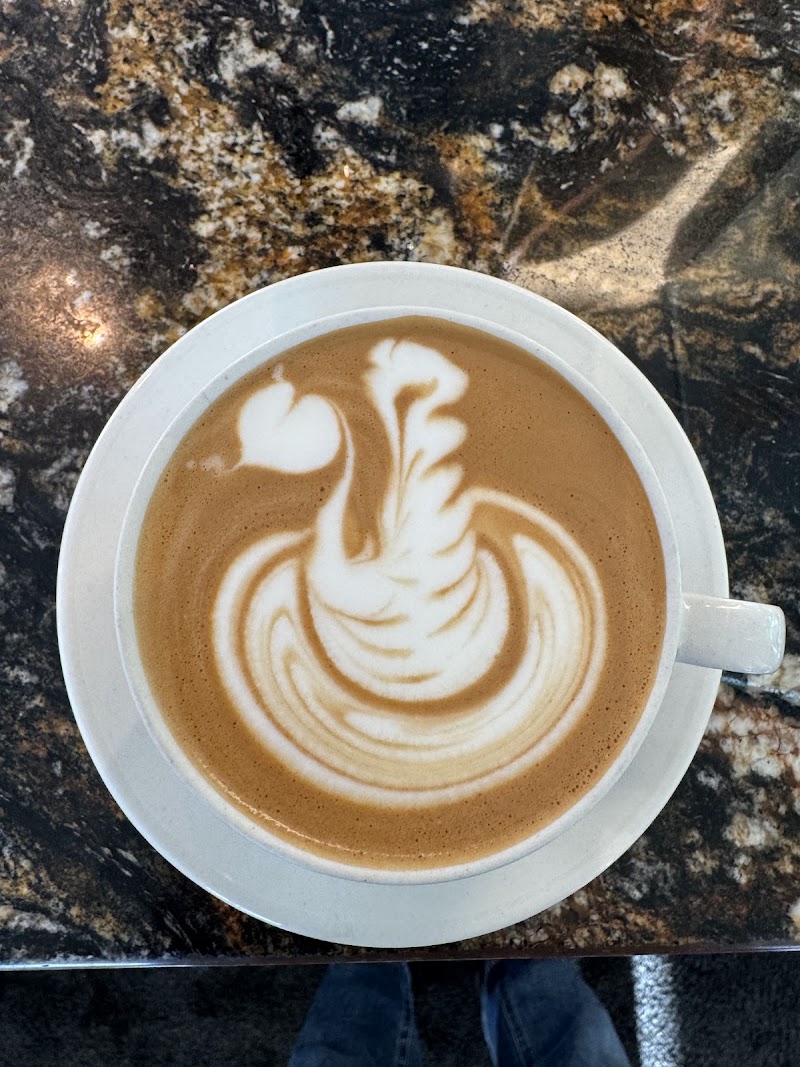
Visitor reviews
Reviews last updated: 2026-08-10 17:35:53
Data is refreshed monthly. Sources: ottawanka.com and editorial picks based on reviews.
Подобається все в цій маленькій кав'ярні! Атмосфера, обслуговування від Матіаса та Даніеля, смачна кава та їжа! Варто того, щоб туди поїхати, обов'язково повернуся! 🙂
Я обожнюю їхні ванільні лате, це просто ідеальна кількість солодкості, але не надто насичена. Тости з авокадо такі смачні, чому я ніколи не подумала додати карамелізовану цибулю? Таке миле місце і чудове обслуговування.
Я зайшов на каву, і Енджел створив чудовий напій з великою увагою до деталей. Смак був м’яким і збалансованим, і він знайшов час, щоб запитати про мої вподобання та дати рекомендації, які я дуже оцінив. Обслуговування кл…
Дуже жвава атмосфера і було важко знайти вільне місце! Хотілося б спробувати страви, обов'язково посидіти з друзями! Мій лате з льодом мав смак нормального, пристойного лате з льодом! ☕️
Я отримав неймовірний досвід завдяки Ангелу, який явно пишається своєю роботою. З моменту мого прибуття вони були привітними, уважними та щиро приємними у спілкуванні. Мої напої були на найвищому рівні! Чесно кажучи, я д…